
Oxford Smart Monitor: The Smart Choice
Summary. Oxford Healthcare enhances patient hoist longevity with the Oxford Smart Monitor control system. This unique diagnostic system for Oxford mobile hoists, precisely records lift cycles ensuring cost-effective and safe usage. Read on to find out more!
Getting the most from your patient hoist seems like a practical concept; why wouldn’t you want to get optimum usage from a product you own? That is exactly our philosophy here at Oxford Healthcare. We strive to bring value, functionality and longevity to our patient handling solutions. We achieve this not only through rigorous design, testing and manufacturing processes, but also through the use of technology. Oxford Healthcare’s Smart Monitor control system is an on-board diagnostic and servicing tool that records operational data with high precision.
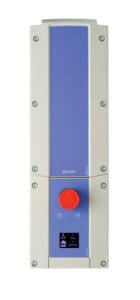
The intelligent Oxford Smart Monitor is individually calibrated to your lift and records the exact amount of work completed by the actuator each and every time the lift is used. The software’s unique algorithm converts this data to display one of the industry’s most accurate lift cycle counts, via the on-board LCD screen.
What Is A Full Lift Cycle?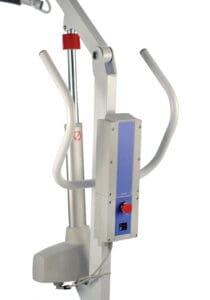
There is some debate and confusion surrounding this topic and this is where the Oxford Smart Monitor stands out. It records a lift cycle when the lift’s actuator has completed the exact amount of work necessary, for one complete lift cycle (a full raise and lower), at maximum safe working load. This method of counting ensures Oxford patient lifts benefit from significantly longer service lives and your facility benefits from reduced lifetime costs, especially when considering costly actuator replacement(s).
Some lift counters define a single lift as a nominal length of actuator travel at a nominal safe working load that doesn’t consider a maximum capacity lift. This could conceivably be from the floor, at the lowest level of actuator travel, to a high surface, at the highest level of actuator travel at maximum safe working load. The Oxford Smart Monitor classifies this as a single lift. Other hoists, because of their predetermined algorithm, could record more than one lift for the equivalent amount of work. Conversely, an Oxford hoist might be in use on several occasions at lower loads and lower ranges of travel, before it records a single lift cycle.
True Value
It is the method of counting lift cycles where the Oxford Smart Monitor excels in offering customers true value. Particularly when considering the lifetime costs of patient lift ownership. Oxford Healthcare use Linak actuators on its Oxford range of patient lifts and these have a manufacturer backed recommended life cycle of 40,000 full actuations, at which point it is advised they are replaced.
It is clear to see that in line with this guidance, the need for expensive actuator replacement on an Oxford lift is reduced significantly. Perhaps as low as a third when compared to other products in the market. Maintenance costs should be an important consideration because what may appear to be an economic and very competitive lift choice based on the initial purchase cost, might in fact cost much more over the product’s full lifespan. Indeed, an actuator is likely to be the most expensive component to replace on a patient hoist.
A Safer Environment
The benefits of the Oxford Smart Monitor are not only associated with longer-term cost savings, but it is also designed to increase safety. This is achieved in several ways. Firstly, the intelligent Smart Monitor advises the user to schedule key maintenance routines in line with requirements such as LOLER (UK). By ensuring the lift completes regular inspections by a qualified service engineer helps to ensure it remains in tip-top condition for longer, just like a motor vehicle.
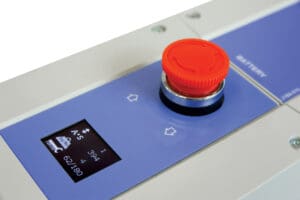
The Oxford Smart Monitor diagnostic system can also detect if a user has attempted to lift a load in excess of the maximum rated capacity of the lift. The system will register each and every attempt and display this figure on the on-board read-out. This functionality allows service engineers and caregivers to understand if the lift has been subject to misuse. Attempting to lift more than the safe working load could place additional stress on the product and so the in-built software will not allow a lift above the maximum safe working load to take place. The lift will cease lifting activity, regardless of user inputs, to protect safety.
In addition, there are redundant controls on the control box which in the unlikely event of handset failure, allows the user to continue with the lifting task. An emergency stop button is also well placed to cut power to the lift in the event of an emergency situation, helping avoid unnecessary injury to the patient and or caregiver.
Oxford Smart Monitor Diagnostic Control System For Oxford Mobile Lifts
The Smart Monitor from Oxford Healthcare can be calibrated for use and retrofitted to most electrically operated Oxford mobile patient lifts. A suite of engineer handsets enables key usage data to be pre-installed so that previously determined lift cycle counts can be accounted for. In addition, service periods and overload counts can be reset at the appropriate service intervals.
Are you interested in the Oxford Smart Monitor diagnostic control system? For more information or to find out more about hoist safety, head to our website today or call 0344 811 1158 to speak to a member of our helpful and friendly team.
If you have found this blog helpful, then you may wish to read our previous blog on Types Of Hoists.